Work experience
Engineering at SEL
Software/AI Engineer at SEL · Dec 2023 — Present
I build automation and AI tools for SEL engineers, from IEC 61850 functionality, GOOSE simulation, and regression infrastructure to APEx and Copilot-based workflows.
01 · Context
From relay test automation to AI tooling.
I joined the team building SEL’s IEC 61850 automated test framework and later led its development across the company’s relay products. Beginning in 2024, I also contributed to SEL’s broader AI adoption through APEx, MCP-Wireshark, and GitHub Copilot plugins with custom agents and workflows.
02 · Projects
Inside the engineering work.
Each case study covers the problem, what I built, and how the system works.
Test automation
IEC 61850 Automated Testing Framework
An automated framework for exercising communication behavior across SEL’s relay products.
My contributionI joined the team and later led development. I built the GOOSE Simulator, set up the regression system, and helped develop the device object API.
Read case study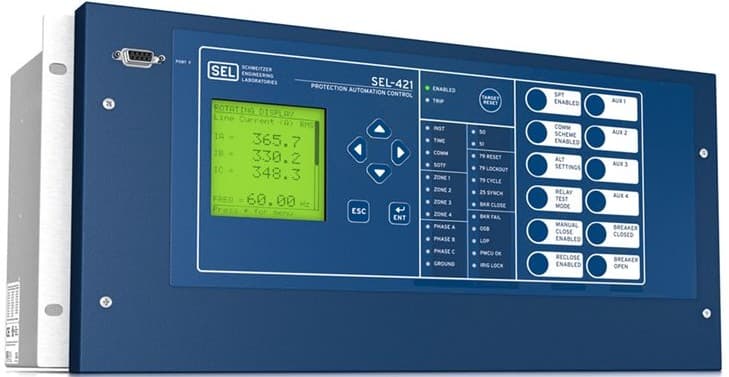 Relay hardware context
Engineering knowledge
APEx
A standalone RAG service that helps engineers find TCS actions in 1,000+ Confluence documents, with source citations.
My contributionI built ingestion, permission-aware hybrid retrieval, reranking, and the SSO-authenticated serving path to self-hosted inference.
Read case study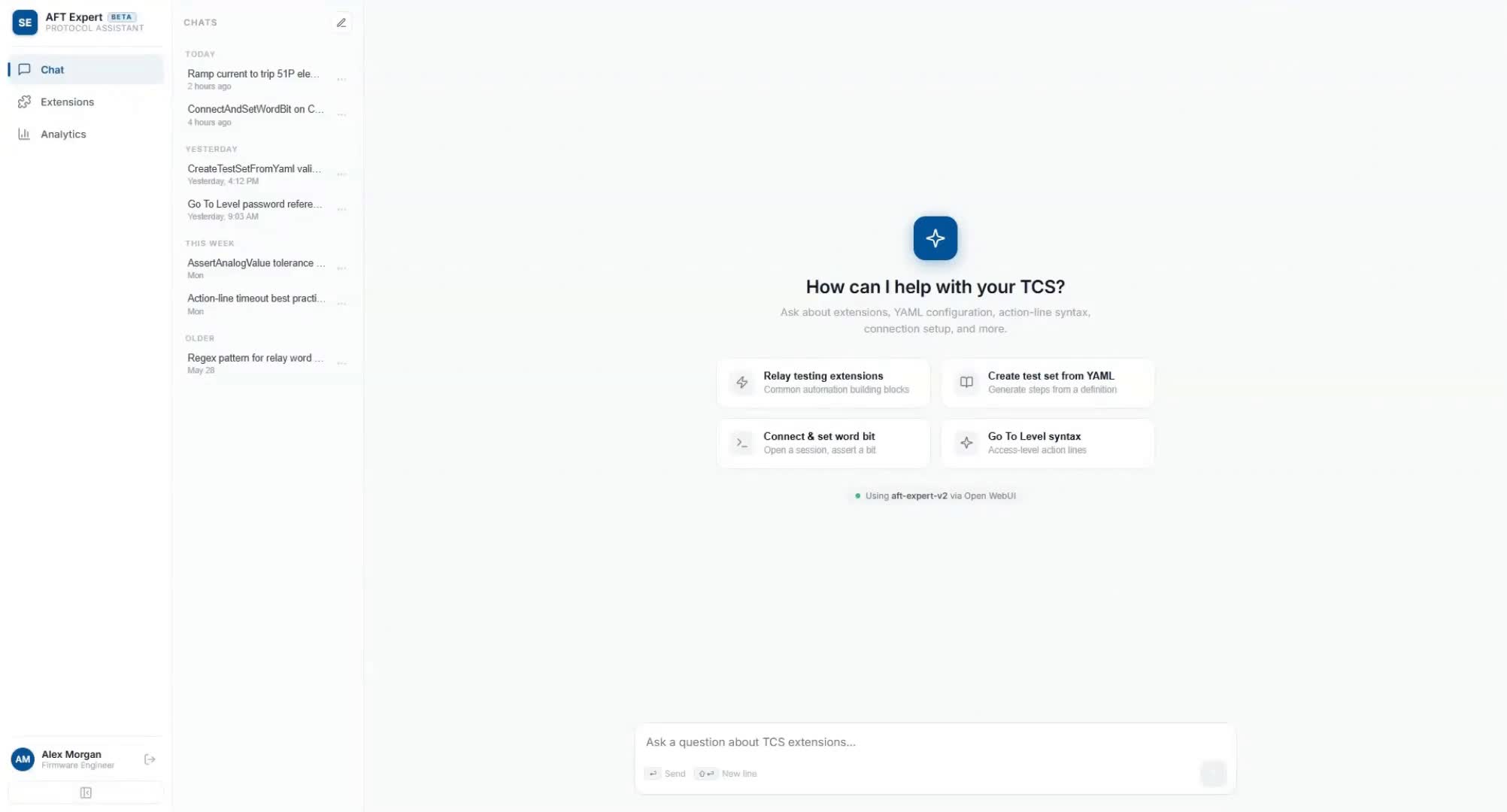 Product recording
Copilot-based workflows
Agent Harness & Workflows
Engineering agents grounded in the team’s specifications, code, documentation, and test tools.
My contributionI built MCP connectors, context builders, skills, and workflows, with deterministic checks, guardrails, and human review around development and testing.
Read case study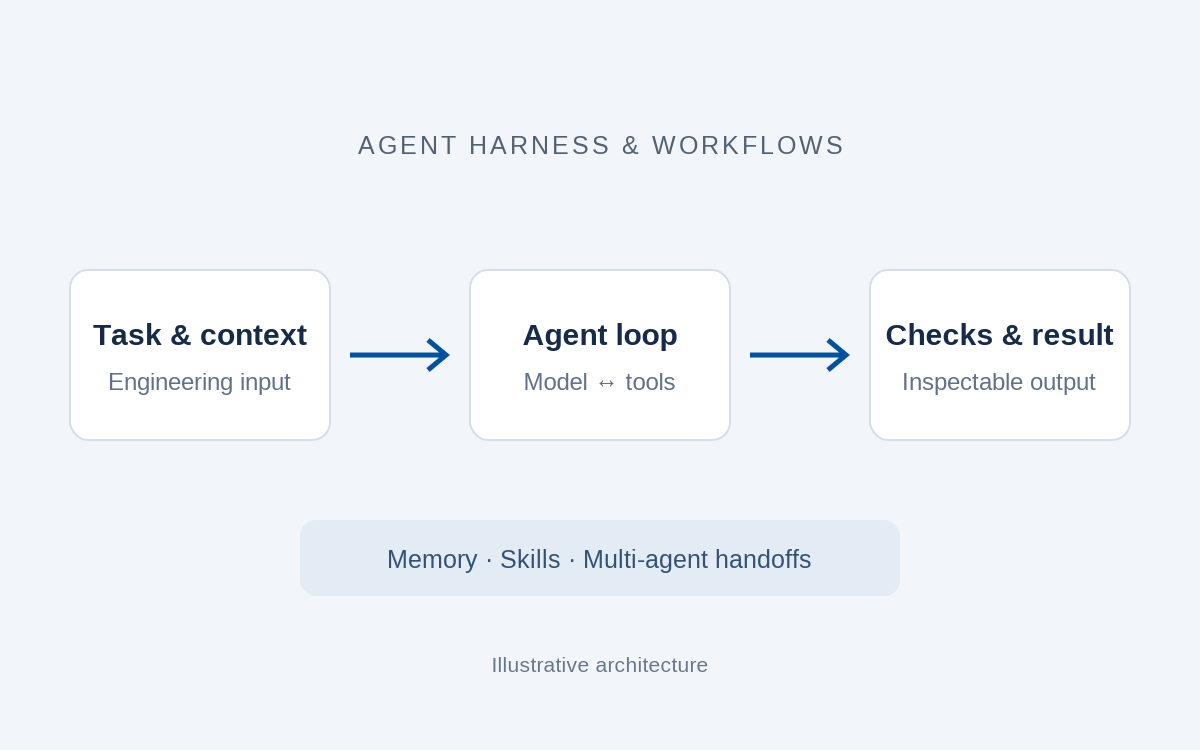 Illustrative architecture
Company context
What does SEL do?
Schweitzer Engineering Laboratories (SEL) builds protective relays and control systems for electric utilities, data centers, and industrial facilities. These systems detect electrical faults and signal circuit breakers to isolate the affected part of the power system.
Explore SEL’s power-protection examples
- Protect people: reduce exposure to dangerous fault current and arc-flash energy.
- Protect equipment: limit damage to power lines, transformers, generators, and switchgear by clearing short circuits and other faults quickly.
- Protect service: isolate the faulted section so a local problem is less likely to become a wider outage.
The relay decides. The breaker interrupts.A relay measures current and voltage and sends a trip command. The breaker physically opens the circuit to stop the fault current.
Keep a line fault from spreading.
A short circuit on a power line can send damaging current through the system. Protection identifies the faulted section so the right breaker can disconnect it.
- Line faultAbnormal current
- SEL relayDetects the fault
- Circuit breakerOpens on command
- Fault isolatedDamage is limited
Coordinated protection limits the affected area; restoration systems can then return healthy sections to service.
How SEL applies thisProtect the power behind the servers.
Servers and cooling depend on electrical infrastructure. A fault on one feeder should be isolated by its breaker, while coordinated protection keeps healthy circuits connected.
- Feeder faultShort circuit
- SEL relayIssues a trip
- Feeder breakerDisconnects the fault
- Healthy circuitsStay connected
Fast fault isolation helps reduce equipment damage and downtime. UPS systems, generators, and transfer controls provide additional resilience as part of the facility's design.
How SEL applies thisThat brief blink can be protection at work.
A branch briefly touching a line can trigger a recloser to open, interrupting power, then close again after a delay. If the temporary fault has cleared, your lights come back.
- Temporary faultBranch contacts line
- Recloser opensA brief interruption
- Recloser retriesCloses after a delay
- Power returnsIf the fault cleared
An SEL recloser control, such as the SEL-651R, can direct that sequence on a utility's recloser. A persistent fault can leave it open. This is one possible cause of a whole-home blink; a flicker alone does not identify the device or manufacturer.
How SEL applies thisIllustrative sequences; actual operation depends on system design and protection settings.
Tools behind the work
IEC 61850 · GOOSE · MMS · Python · Test automation · RAG · Agent harnesses
Continue exploring
ContextQuant